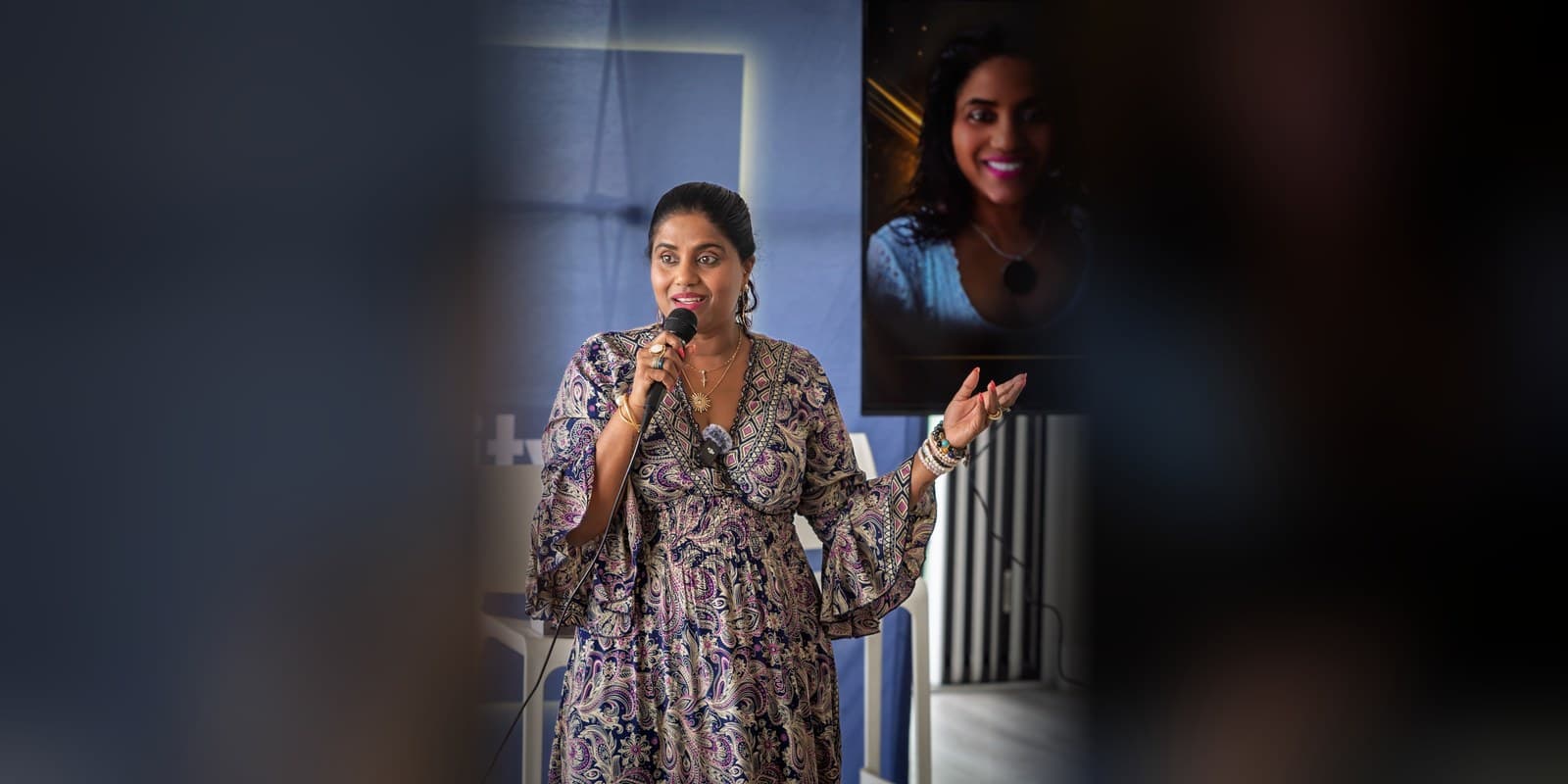
Every discipline has a question it cannot stop asking. Kohila Sivas found hers early, and in twenty years it has not moved: why do intelligent, capable people struggle even when they know exactly what to do? She watched students take more tutoring and stay exactly where they were. Parents collected strategy after strategy. Educators burned out. Founders held the plan and could not execute it.
The industry answer is more input — another programme, another planner, another round of discipline. Her answer is different. The visible problem is rarely the real one. A strategy can be excellent and still fail, because the human system it lands on is not ready to use it. The fault is not in the plan. It is in what the plan was asked to sit on.
The question under the result
She earned that reading the hard way. At twelve she reached the point of attempting to take her own life. She was not incapable, and she was not a problem child. She was a person struggling inside systems that had no language for what sat underneath the behaviour and the marks. The adults graded the surface. Nobody asked what the surface was standing on.
So she stopped asking what is wrong with a person, and started asking what is blocking them. The first question makes the person the fault. The second makes the block the object of the work. A missed target is data about a system, never a verdict on a person. The score is where most people start. She starts underneath it.
Blocks to Flow
Her method starts from a different question: not how do I make this person perform, but what is preventing them from reaching their own capacity right now. Most people arrive convinced they need more discipline, more motivation, more information. Usually they need none of it. They need the block to be seen.
People mistake their blocks for identity — I am lazy, I am bad at math, I procrastinate. She does not take the sentence as the fact. What happened before it, what is the pattern protecting, and what is the behaviour trying to say? A child who stops trying is not showing an absence of ability. A founder who stalls is not showing an absence of ambition. Both are showing where the system stopped feeling safe enough to move.
In practice the method looks less like motivation and more like detective work. She traces the moment a person shuts down, the condition that precedes it, and the quiet logic the pattern is running. Name that, and the fix is rarely dramatic — a block lifted rather than a will overpowered. Once the block is named, shame decreases and choice increases. That is what she means by flow. It is not a personality some people are born with. It is what any system does when nothing is standing in its way.
The record, and the ripple
Two decades of the work now has names: Blocks to Flow, the ReadinessOS programs aimed at the barrier underneath the result, and Compass & Campus, the wider platform and marketplace built with other educators. On 9 January 2027 she takes the argument to the TEDx stage in Spoleto, Italy: Readiness Precedes Performance.
The destination is deliberately outsized — one and a half billion lives touched by 2035. Not from a stage, she says: one educator reaches hundreds, one parent changes a family. A ripple. The biggest lesson of more than twenty years is the simplest to say. Push the result without finding the block and you create more resistance, not less. Readiness is not permission to wait. It is the discipline to find the real obstacle before spending the effort. Nothing works until the human system is ready.
