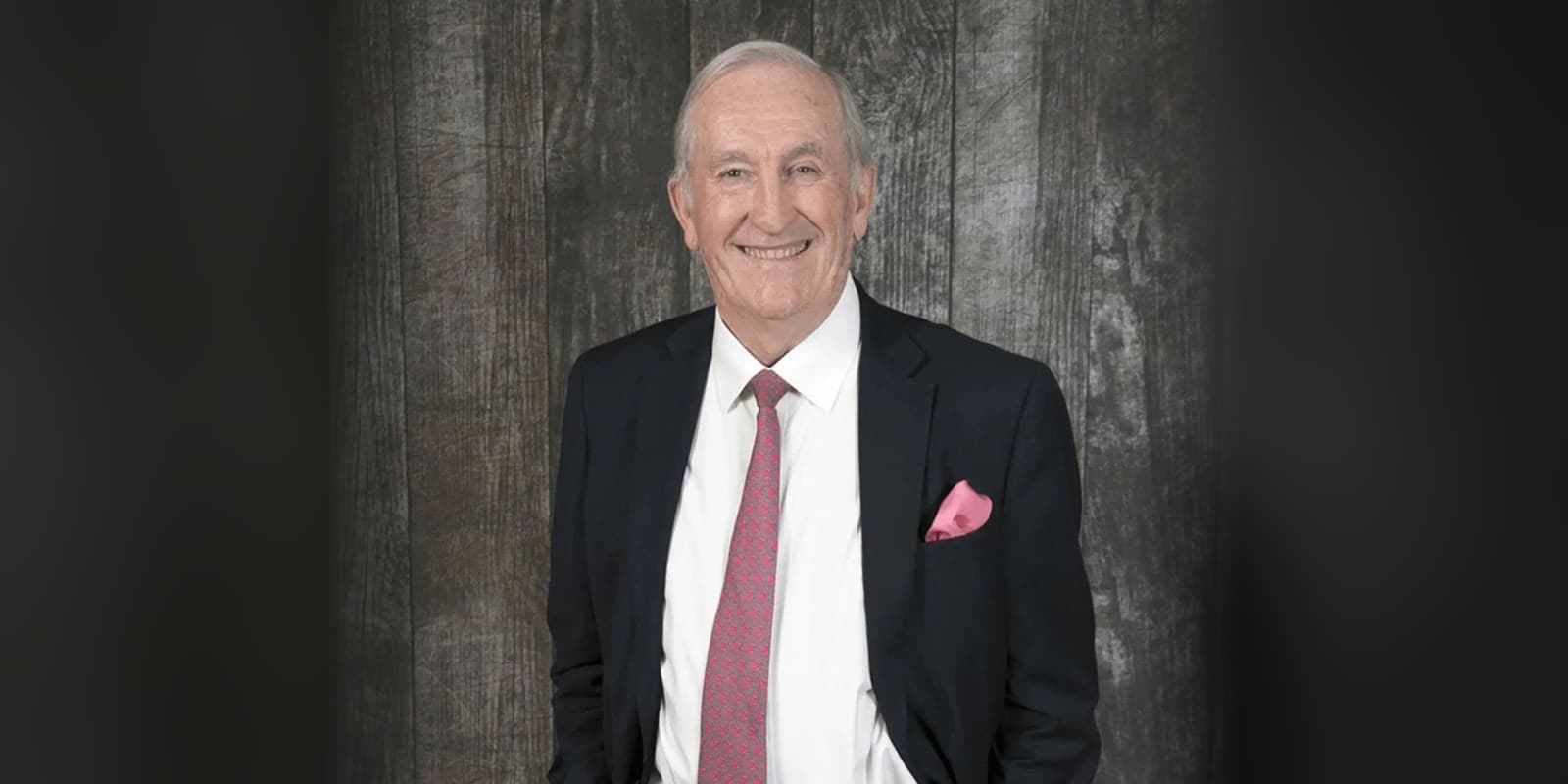
James Espey was born in Zambia in 1943, in the Livingstone hospital, twenty-one years after his mother was born in the same building. Her grandfather kept the books for the company that built the Victoria Falls Bridge; the family lived in huts on the bank of the Zambezi while the steel went up, and later in the first house in Livingstone with a tin roof. That is the file he still opens with. Not a brand, not a kilt, not a case number. A hospital, a bridge, a roof that kept the rain off.
School was Cape Town — four days and four nights by train, twice a year, for ten and a half years. A BCom in marketing and accounting from the University of Cape Town in 1965, then a full-time MBA finished in 1969 with a thesis written inside Coca-Cola. They offered him the canning desk. He chose the drinks trade instead, and repaid the loans that bought both degrees shortly after his thirtieth birthday.
A savage from the colonies
In 1970 he joined Gilbeys South Africa as sales director. In 1977 London called: group marketing director of International Distillers & Vintners, and that November, the main board — the first non-Englishman on it. Not everyone approved. To some of the club he was "a savage from the colonies," and they said so. He kept the phrase. It is how the room sounded when a man from Livingstone sat down with men who had never taken the train.
The savage got to work. He remade Baileys into the world's No. 1 liqueur, some eight million cases a year. In 1979 he took a South African coconut drink called Coco Rico, found a Malibu trademark in the cupboard, bottled it in Harlow, Essex, and shipped it as Caribbean-style rum — the world still believes it was always Caribbean. The Classic Malts and Johnnie Walker Blue Label date from his years running United Distillers' North America business, and so does The Keepers of the Quaich, the whisky society he created in 1988 whose guests of honour have included King Charles III, Ronald Reagan and F.W. de Klerk.
The Chivas play
Joining Seagram in 1992 as president of the Chivas Regal and Glenlivet group, he set one condition: $100 million, largely on stock, so that Chivas Bros could grow from under two million cases to five million within twenty-five years. Ninety for whisky to sleep in barrels, ten for the distilleries and Linn House, a hospitality home for the trade. Seagram's president wrote later that he nearly fell over. He signed anyway.
Then Espey put on the kilt of the Keepers, went on Chinese television holding a bottle of Chivas Regal, and told a country just coming into money to drink better. Chivas became the top whisky in China. The five-million-case mark was passed some twenty years after he left the company, exactly as the 1992 paper had planned. In 1997 he put Chivas Regal 18 on the shelf — today the No. 1 eighteen-year-old whisky in the world.
Retired. Three exclamation marks.
His CV gives 2008 a single line — "Retired ! ! !" — and nobody believed the punctuation. In 2003 he had backed two young men launching an email-security company called Mimecast at his dining-room table. It floated on NASDAQ in 2016 at $10 a share and was acquired by Permira in 2022 at $80 — $5.6 billion. The year he "retired" he founded The Last Drop Distillers, financed from savings, flying economy while hosting dinners in the kilt; Sazerac bought it in 2016 and keeps it at the top of the portfolio.
The OBE for services to the whisky industry came in 2013. The Espey scholarship at his old school in Cape Town has a written criterion: poor, likes sport, reasonably bright — his own file, in other words. In Livingstone he pays the school fees of two girls, and bought one a bicycle so she rides to school instead of walking an hour each way.
Retirement, on this file, is the chairmanship of a start-up whisky distillery twelve miles from Stonehenge, accepted in June 2022 as "an interesting seven-year challenge." By his own arithmetic the brands he built or remade have earned more than £5 billion for Diageo, delivered £10 billion of brand value to the UK economy, and count ten thousand jobs against the career. He is eighty-three. The casks still have to rest. Stock still going down.
